How to Choose an IPTV Provider in Quebec: 10 Criteria (2026)

Choosing an IPTV provider in Quebec is harder than it should be. The Quebec IPTV market has dozens of services advertising to Canadian and Quebec consumers. Most of them aren't actually built for Quebec, they're generic global IPTV resellers with a French-language landing page tacked on. Others are local operators charging cable-tier prices for below-cable service. Separating the real providers from the noise requires a clear framework, not a "here are our top picks" list.
This is that framework. Ten criteria that actually distinguish a legitimate Quebec IPTV provider from a repackaged global reseller. Use this checklist to evaluate any IPTV service before subscribing, whether it's on someone else's "best of" list or not. Providers that pass at least eight of these ten are worth a trial. Providers that fail three or more should be avoided regardless of price.
Why Choosing the Right Provider Matters for Quebec Households
Quebec is home to roughly 3.4 million francophone households according to Statistics Canada's 2021 Census data, a consumer base that expects genuine French-language service, not a translated landing page. Quebec IPTV consumers have a specific problem that consumers in English-only markets don't face. A service can look perfectly professional in English, have all the right trust signals, and still fail the Quebec household because the French-language experience is an afterthought, the channels are there at low bitrate, the customer support is English-only despite claims otherwise, and the billing portal doesn't even have a French toggle.
The 10 criteria below are weighted around this reality. They prioritize Quebec-specific operational quality alongside general IPTV provider trust signals. A provider that passes all 10 is serving Quebec deliberately; a provider that fails any of the Quebec-specific items is serving Quebec incidentally and shouldn't be trusted for a francophone-primary household.
The 10 Criteria for Choosing an IPTV Provider in Quebec

1. Canadian-Hosted Server Infrastructure
Stream quality on IPTV is bottlenecked by the physical distance between servers and viewers. A provider running servers in Canada delivers lower latency and more consistent bitrate than one running servers in Europe or Asia serving Canadian customers over transatlantic links. The CRTC's broadband framework emphasizes the role of domestic network infrastructure in reliable consumer streaming performance.
This matters most for live sports, where even small quality variations during fast-motion content are visible. It also matters during major event viewing windows (professional hockey playoffs, combat-sport PPV events) when server load spikes and distant infrastructure buckles.
How to verify: Ask the provider directly where their servers are hosted. Legitimate Canadian operators answer this question clearly. Evasive answers are a red flag.
2. Full Francophone Network Coverage in HD
A Quebec IPTV provider must carry the major Quebec francophone broadcast networks, the top francophone general entertainment network, the public francophone broadcaster, the primary and secondary francophone sports networks, and the third major francophone entertainment network, in clean HD at minimum, with 4K available on premium tiers.
Services that carry these at SD only, at visibly low bitrate, or with frequent freezing during peak viewing are not actually serving Quebec.
How to verify: Open a free trial and watch each major francophone network for at least 10 minutes during live programming. Check for compression artifacts during fast-motion content. Check audio sync. Verify HD resolution on your TV, not just in the app's stream-info display.
3. Bilingual Customer Support
Quebec households need customer support that operates fluently in both English and French. For francophone-primary households this means: a French-speaking staff member responding within the same time window promised in English (not 4 hours later), fluent written French (not translated-by-software French), and the ability to discuss technical issues in French without the conversation defaulting to English.
How to verify: During the free trial, send a detailed technical question in French (describe a real or hypothetical buffering issue). Time the response. Evaluate whether the response is fluent Quebec French or obviously machine-translated.
4. Bilingual User Interface, EPG, and Billing
Beyond customer support, the service itself needs to operate bilingually. This includes:
- Bilingual website and signup pages with a working language toggle
- Bilingual billing portal (where you manage your subscription, update payment, check renewal dates)
- Bilingual EPG (electronic program guide), channel names and program descriptions in the user's chosen language
- Bilingual app configuration guides
Services that operate entirely in English with a translated landing page are serving Quebec incidentally, not deliberately.
How to verify: Sign up, log into the billing portal, open the EPG, and check whether each environment is fully bilingual. Partial translation (some pages translated, others English) is a signal the provider hasn't prioritized the Quebec market.
5. Free Trial Without a Credit Card
A no-credit-card trial is the strongest trust signal in the IPTV category. It signals the provider is confident you'll convert on service quality rather than through forgotten-cancellation auto-renewal.
Card-required trials are structured specifically to extract involuntary payments from customers who forget to cancel. This is a pattern borrowed from the subscription-trap subsector of consumer services and shouldn't be tolerated in IPTV.
How to verify: Does the provider offer a trial? Is it contingent on credit card entry? If the answer is "credit card required," look elsewhere.
6. Published Refund Policy With Defined Timeframe
A real, written money-back guarantee with a specific timeframe (typical: 3 days; some providers offer 7 days). The policy should be published on the website, easy to find, written in clear language, and cite specific conditions.
Vague or buried refund policies are effectively not refund policies. Providers that can't document their refund terms shouldn't be trusted with annual subscription payments.
How to verify: Search the provider's site for "refund," "guarantee," or "money-back." Read the actual policy text. Check that it names a timeframe and a process for requesting a refund.
7. Transparent CAD Pricing
All plans and exact Canadian dollar amounts publicly displayed. No "contact us for pricing." No currency ambiguity. No promotional pricing with fine-print tripling after the promotional period.
A provider that hides pricing behind a contact form or confuses pricing with "starting from" claims is typically doing so to charge different customers different rates based on how desperate they seem. This pattern doesn't belong in 2026 Canadian consumer services.
How to verify: Does the provider display all plans with exact CAD prices on the pricing page? Are the prices stable across visits (not dynamically inflated)?
8. Payment Method Flexibility Including Interac
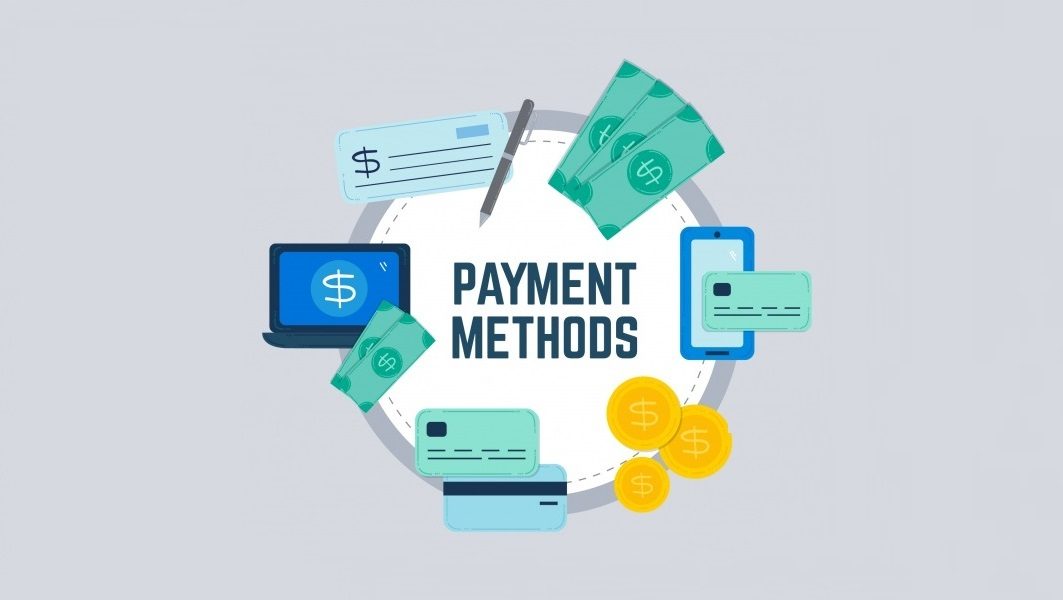
Canadian household-friendly payment methods including credit cards (Visa, Mastercard, Amex), PayPal, Interac e-Transfer, and optionally cryptocurrency. Interac acceptance in particular signals a Canadian business banking relationship and operational maturity, including compliance with Canadian privacy legislation such as PIPEDA.
Crypto-only payment operations are a red flag. They signal either an attempt to stay outside the traceable financial system or an operation too small or too new to have established real banking relationships.
How to verify: Check the checkout or support page for accepted payment methods. Interac e-Transfer acceptance is the Canadian-legitimacy marker.
9. High-Quality EPG with Francophone Program Data
The electronic program guide (EPG) is how you navigate 25,000+ channels. A good EPG loads quickly, shows accurate current and next programming, and displays program descriptions in the user's language. A bad EPG is outdated, incomplete, or in a wrong language.
For Quebec households, the EPG should display Quebec francophone network programming in French with accurate show titles and descriptions, not translated-by-software titles or placeholder text.
How to verify: During the trial, open the EPG and check a francophone channel's current and upcoming programming. Verify show titles are in French and match what's actually airing. Scroll through the EPG to check that future programming is populated (not blank or showing "program information unavailable").
10. Human-Reachable Contact Channels
Look for messaging apps (popular messaging platforms accepting contact), email, and ideally a phone number with real staff responding. The key: a real person, not a chatbot. Response time under 5 minutes during business hours for the primary contact method is the mark of a provider that actually supports its customers.
Anonymous-checkout services with no human contact are the single highest-risk category in IPTV. If something goes wrong, billing dispute, service outage, payment problem, having a real human to contact is what separates a legitimate operator from a fly-by-night reseller.
How to verify: Send a pre-purchase question through the provider's primary support channel. Time the response. Evaluate whether it comes from a real person or a template.
Red Flags Checklist: What to Avoid
Services that exhibit these signals should be rejected regardless of price:
Operational red flags:
- Prices dramatically below the market ($3/month for 100,000+ channels)
- No free trial, or trial requires credit card
- No refund policy or vague refund language
- Crypto-only or cash-only payment
- No identifiable business name or contact details
- Brand-new domain (registered in the last few months)
Trust red flags:
- No Terms of Service, Privacy Policy, or DMCA page
- Reviews that all seem to be from the same few people
- Customer service via chatbot only
- English-only despite claims of French support
- Frequent rebrands or service name changes
Service quality red flags:
- Low-bitrate streams during the free trial
- Francophone networks missing or at SD only
- EPG empty or showing wrong information
- Buffering issues during normal (non-peak) viewing
- Support non-responsive during the trial
One or two red flags might be a launch-phase issue worth tolerating. Three or more is a signal the provider isn't built for serious Quebec customers.
What Good Looks Like: Example Provider Signals
Disclosure: This blog is operated by IPTVQuébécois. The following section describes how our service meets each criterion, provided as a worked example of a provider that passes all 10 tests.
Infrastructure
Canadian-hosted servers.
Francophone Coverage
Full francophone network coverage in HD across the Standard tier; 4K on Premium.
Bilingual Support
Bilingual support through messaging apps, Telegram, and email. Sub-5-minute response times. Quebec-French staff, not machine translation.
Bilingual Interface
Fully bilingual website, billing portal, and EPG.
Free Trial
24-hour trial, no credit card required.
Refund Policy
3-day money-back guarantee, documented on the site.
Pricing Transparency
All plans publicly displayed with exact CAD amounts. IPTVQuébécois plans start at $6.67 per month on annual billing.
Payment Flexibility
Visa, Mastercard, Amex, PayPal, Interac e-Transfer, and cryptocurrency accepted.
EPG Quality
Smart EPG with French-language programming data.
Human Support
Real staff, named contact methods, messaging apps with sub-5-minute response times.
This is the full-pass standard. Providers that match it are worth a trial; providers that fall well short should be avoided.
Conclusion
Choosing an IPTV provider in Quebec isn't about picking the cheapest option or the one with the most channels. It's about picking the one that actually operates for Quebec customers deliberately, Canadian-hosted, bilingual across every touchpoint, transparent on pricing and policies, and reachable through real human support. The 10 criteria above are the working checklist for evaluating any provider. Apply them during free trials, weight the francophone-specific items heavily for Quebec households, and reject any provider that fails three or more. The IPTV category has its share of unreliable operators, but the legitimate ones are clearly identifiable using this framework. Choose carefully, test during the trial, and commit only when the provider has actually passed the full checklist.
Ready to test a provider that passes all 10 criteria? Start a 24-hour free trial with IPTVQuébécois, no credit card required.
Some readers evaluating providers are doing so as future operators rather than consumers, if you're interested in offering IPTV to your own customer base under a legitimate Canadian operator, see how the IPTVQuébécois reseller program is structured for entrepreneurs entering the market.
*Need the French version? Read Fournisseur IPTV Québec : le guide pour choisir sans se tromper.*
Frequently Asked Questions
How do I know if an IPTV provider is actually built for Quebec?
Apply the 10-criteria checklist. Services built for Quebec deliberately will carry the major francophone networks in HD, operate customer support in both English and French, and run their interface and billing portal bilingually. Services that only pass the English-focused criteria (pricing, device compatibility, general reliability) are serving Quebec incidentally.
What if a provider meets some criteria but not others?
Weight the Quebec-specific criteria heavily (francophone coverage, bilingual support, bilingual interface, Canadian infrastructure). A provider that fails those but passes the general criteria is fine for English Canadian households but not for Quebec households with French-language content needs.
Is a longer free trial better?
Not necessarily. A well-run 24-hour trial is often sufficient to evaluate channel quality, support responsiveness, and app compatibility. Longer trials from discount providers often correlate with lower overall quality and weaker refund protections.
Does pricing correlate with quality?
Partially. Mid-range IPTV ($7–$20/month equivalent) is where the best operational quality tends to cluster. Discount pricing (under $5/month) correlates with lower reliability; premium pricing ($25+/month) sometimes correlates with higher quality but often represents marketing overhead rather than technical superiority.
Should I choose a Quebec-based provider or a national Canadian one?
For households with significant French-language content needs, Quebec-focused providers win on the criteria that matter most (francophone coverage, bilingual support, bilingual interface). For bilingual households that split between English and French content, a national Canadian provider that passes the French-language criteria is also viable. For English-primary households, either works.
What about international IPTV services? Can they serve Quebec?
International services can serve Quebec for English content but typically fail the French-specific criteria. For multilingual households needing many foreign-language channels alongside Canadian coverage, an international service paired with a willingness to use English-only customer support may be acceptable. For Quebec households primarily watching francophone content, they are not the right fit.
Ready to Start Watching?
Try IPTVQuébécois free for 24 hours — no credit card required.
Start Free Trial →